渡辺 実莉

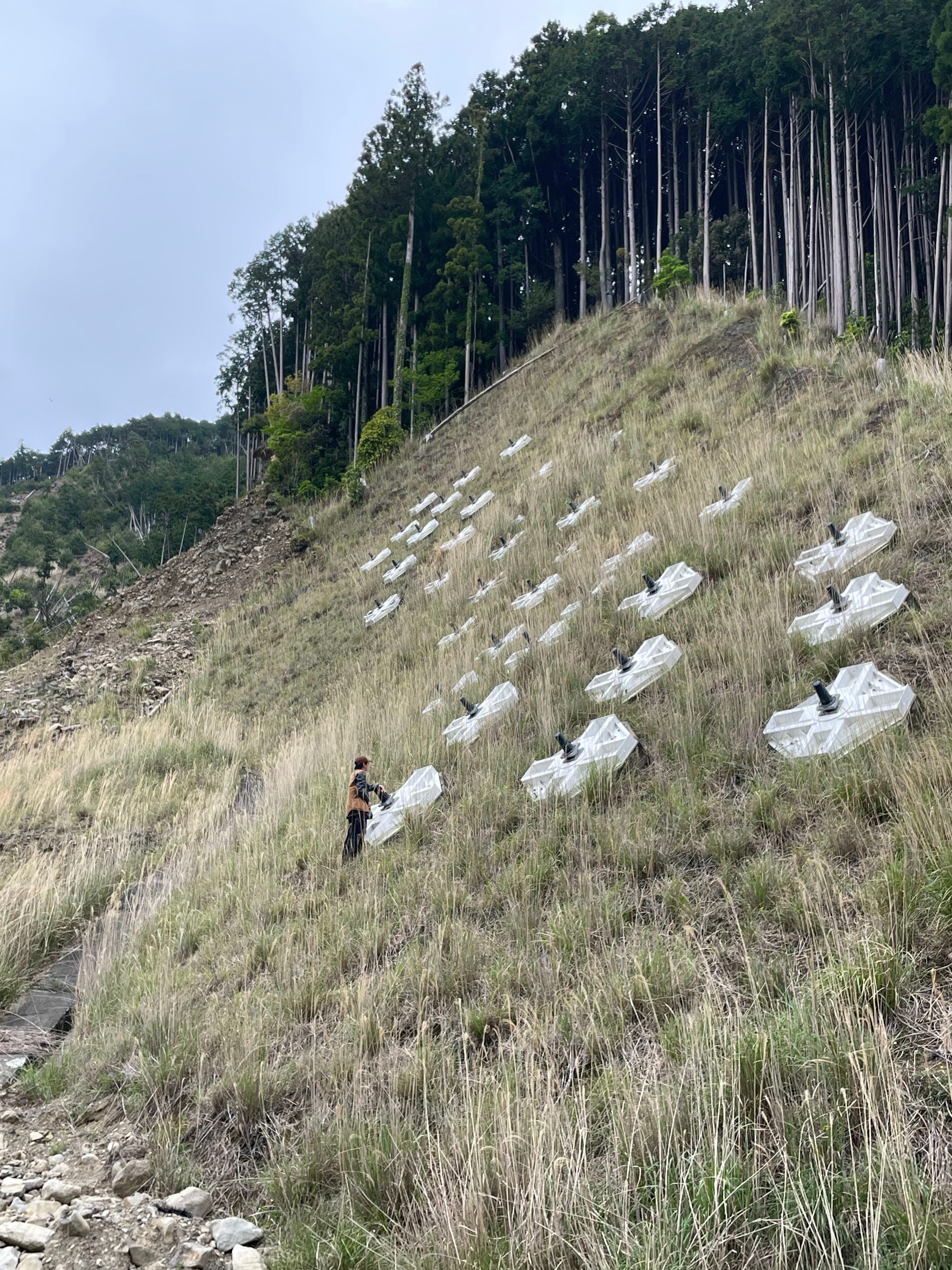
FIG.1
Paul Virilio argued that every technological invention simultaneously invents an accident. For example, just as the invention of the airplane invented the plane crash, and the invention of the nuclear power plant invented the nuclear accident. While media technology has certainly expanded our reality, what kind of “accidents” might such a situation actually trigger?
Much of modern technology has already been reduced to devices designed for optimization. Driven by the capitalist logic of efficiency, its purpose is often framed as being “for the happiness of humanity.” But what is the reality? Can we truly say that technology has made us happier?We can no longer even remember our friends’ phone numbers, and we’re fed up with the constant stream of notifications we receive every day. AI blurs the line between what’s real and what’s fake, making it impossible to tell whether a video of a rare animal is genuine or not.While optimization offers a certain kind of convenience, it robs us of our human capabilities and the breathing room in our daily lives, causing the very foundation of reality to crumble. This might well be a small example of the “accident” Vilierio describes.
Here, “accident” is literally a negative concept implying some form of harm. But perhaps we can reinterpret this term. Rather than the unfortunate accidents that technology inevitably produces, couldn’t we create a new kind of “accident”—one that generates positive effects by intentionally hacking technology?
I’d like to introduce two art projects here. The first is *Google Maps Hacks* by artist Simon Weckert.By loading a cart with a large number of smartphones and wandering around the city, the concentrated location data from these devices can be mistaken for a traffic jam, creating a fictional traffic jam on the map. This is an attempt by an individual to DIY-style intervene in a massive system by exploiting the interactivity of Google Maps, and it also serves to expose the vulnerabilities of digital twins.
The second is *Non-Facial Portrait* by Shin Seung-beok and Kim Young-hoon. As mentioned in the references for this project, this is a work in which the artist paints portraits that AI cannot recognize as “human faces.” In this work, the artist is not allowed to paint faces.They must aim for the space in between—where it appears to be a face to humans but something else entirely to machines.
These examples might be called “incidents” rather than “accidents.” They are practices in which we use our imagination to reinterpret technology and aim to deviate from the optimal solution. While these may be creative “incidents” from the perspective of the practitioners, they could also be perceived as accidents by those in different positions.The line between the two is thin; even when creation is intended, one wrong step can lead to destruction and cause a tragic accident. However, if technology and accidents are inseparable, this also implies the potential for “creative incidents” that reinterpret technology for the sake of a reality yet to be seen.
Akihiro Kubota states, “There must surely be unknown art, yet to be seen, lurking within new media” .Both accidents and incidents will produce rubble. Yet that rubble simultaneously invents new possibilities. It is said that safety manuals designed to prevent accidents are “written in blood” , but we should also be able to create new manuals that outline guidelines for creation rather than merely drawing lessons from accidents.
Deconstruction and reconstruction are sources of hope. There are vistas that become visible only after deconstruction, and worlds that can be created only through the reconstruction of rubble. What matters is not singularity , but plurality .While optimization causes the world to converge into a single entity, creative events open the world up into multiple possibilities. Isn’t that precisely the new way of creating reality that is needed now?
Credit
Related Works