半田地寛
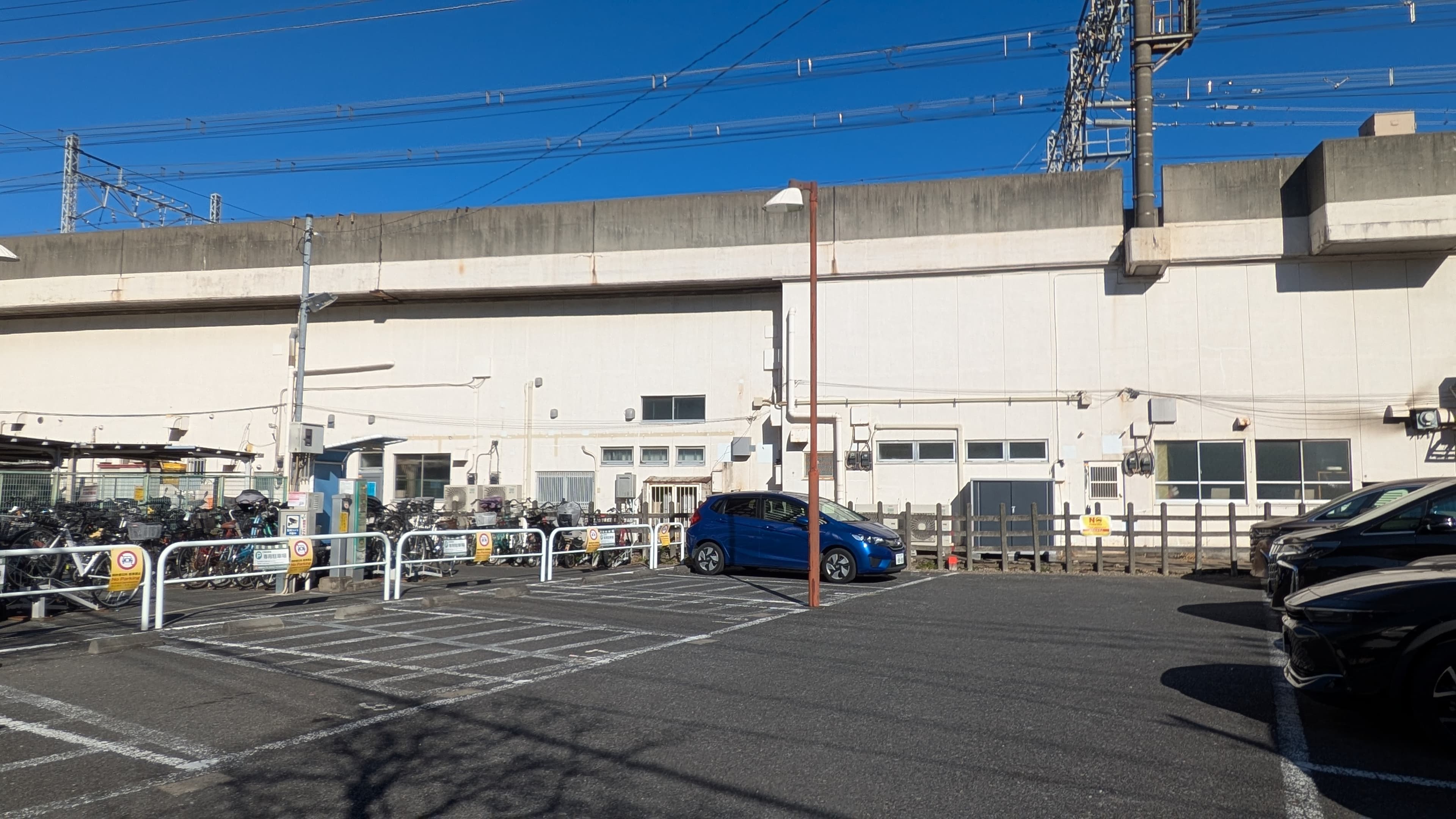
FIG.1
What, exactly, is something that is both creative and public? Is it an object, a system, a law, or a culture? At the very least, it’s not a car. Perhaps it’s not even a law. — I believe that time and open space are the very places where creativity is born.
The space of a road is fascinating. The rules are completely different on sidewalks and roadways. Places that are crowded with freight traffic during the day become less crowded at night. In business districts, areas where people and goods flow busily on weekdays become deathly quiet on weekends.Roads change their character depending on the surrounding environment. I believe it is precisely because work and home are not integrated that this “spare time” is created.
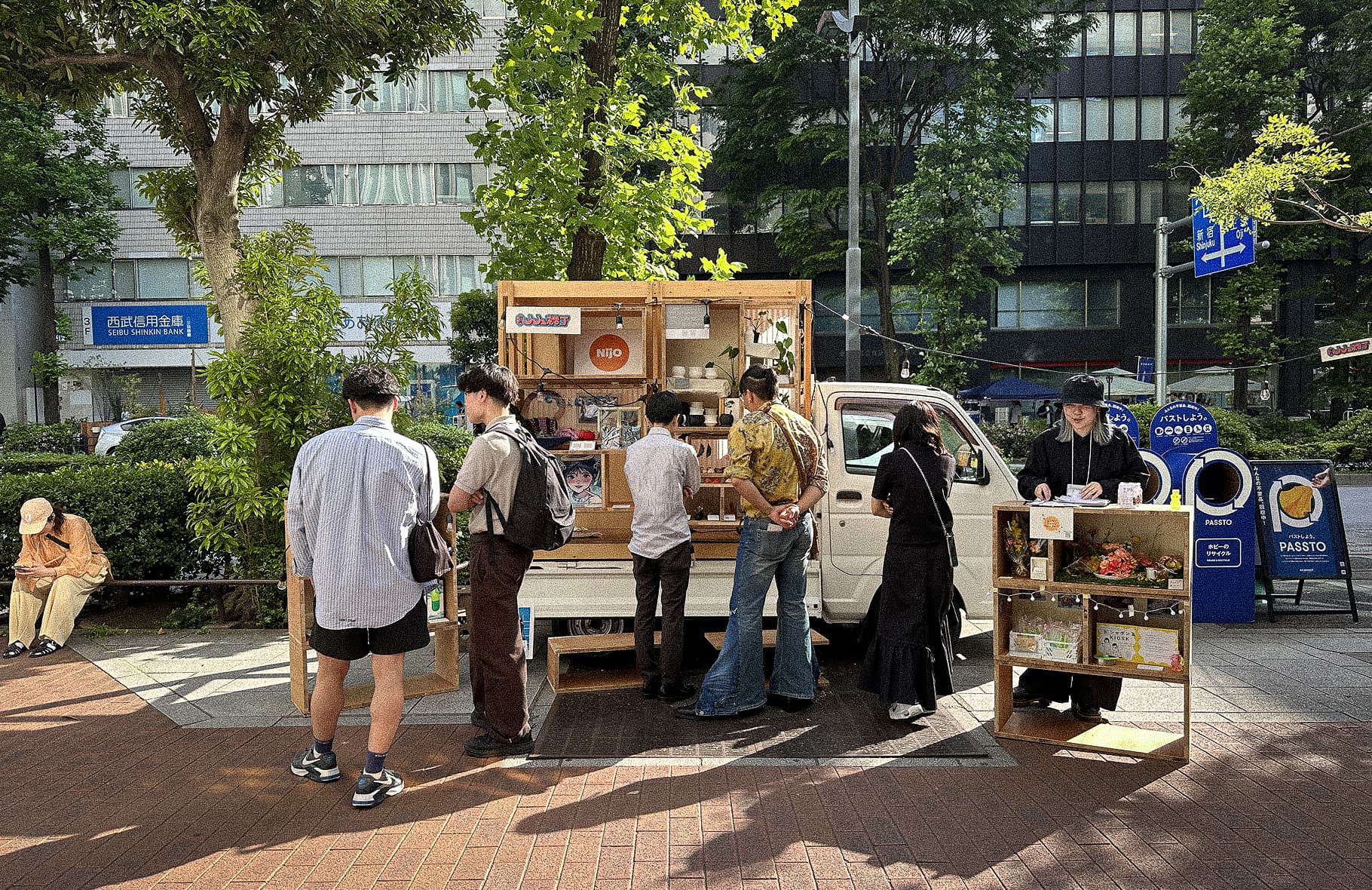
Through “Nijō Architecture,” we’ve organized art creation, exhibitions, and musical performances in a wide variety of locations—from the bustling districts around Tokyo Station, Shinjuku 3-chome, and Shibuya to parking lots in residential and entertainment districts like Kanamachi, Arakawa, and Monzen-nakacho. In Shinjuku at night, people in high spirits from alcohol enjoy themselves to the rhythm of the music.
The space and its arrangement are constantly being updated by the hands of various people—perhaps that very state is what creativity is all about. Roads, plazas, parking lots, parks. In places open to anyone, people you wouldn’t normally expect show up, and new encounters are born. New elements are added, and the space is gradually updated. I think that, in a sense, is what creativity is all about.
The key is that it’s never “finished.” As we talk, it takes shape while constantly changing. Precisely because it’s portable and adaptable, it can transform in endless ways.In a sense, “Two-Tatami Architecture” doesn’t have a fixed, finished form. It’s designed to be reconfigured on the fly to suit the situation. While chatting with people we meet along the way or with acquaintances, we’ll say, “Next, I’d like to try something like this,” and actually assemble and test it right there on the spot. The outdoors is always an unpredictable environment. We make small, iterative adjustments as if responding to a complex web of interrelated factors.
Parking lots, coin-operated parking, and street parking—none of these can be reserved in advance. That’s why we keep multiple options open, weighing the situation on the spot and making choices as we go. Of course, there’s always the possibility of being approached by the police. But that very give-and-take is what makes it interesting. Precisely because nothing is set in stone, both the vendors and the visitors adapt their movements to the situation.Normally, a destination doesn’t move. But “Two-Tatami Architecture” is constantly shifting in response to its surroundings. For those trying to follow it, this can be quite challenging. What makes it possible is the smartphone. Because we can share our current location, people can track this moving destination.
Visitors also enjoy a great deal of freedom. We don’t set up seats. All we have is a stage. Where to watch, where to listen—that’s something each visitor discovers for themselves within the space. Places people usually just walk past become venues the moment “Nijō Architecture” stops. Poles and steps become chairs, and the road becomes a hall.Street trees create a calm atmosphere, while neon signs and streetlights serve as lighting. Every single object in that space begins to take on a new meaning.
An environment we usually don’t even notice is completely transformed. By instantly interpreting this, each person’s actions shape the space. We don’t give instructions. Visitors themselves change the meaning of what’s right in front of them and make use of it. I believe that act itself is what’s truly creative.
The public sphere is about the unpredictable.
Creativity is about having room to breathe.
Following Up on ASIBA's 1st Cohort #1
INTERVIEW
2024.02.06.