Practice of Unsettlement #3
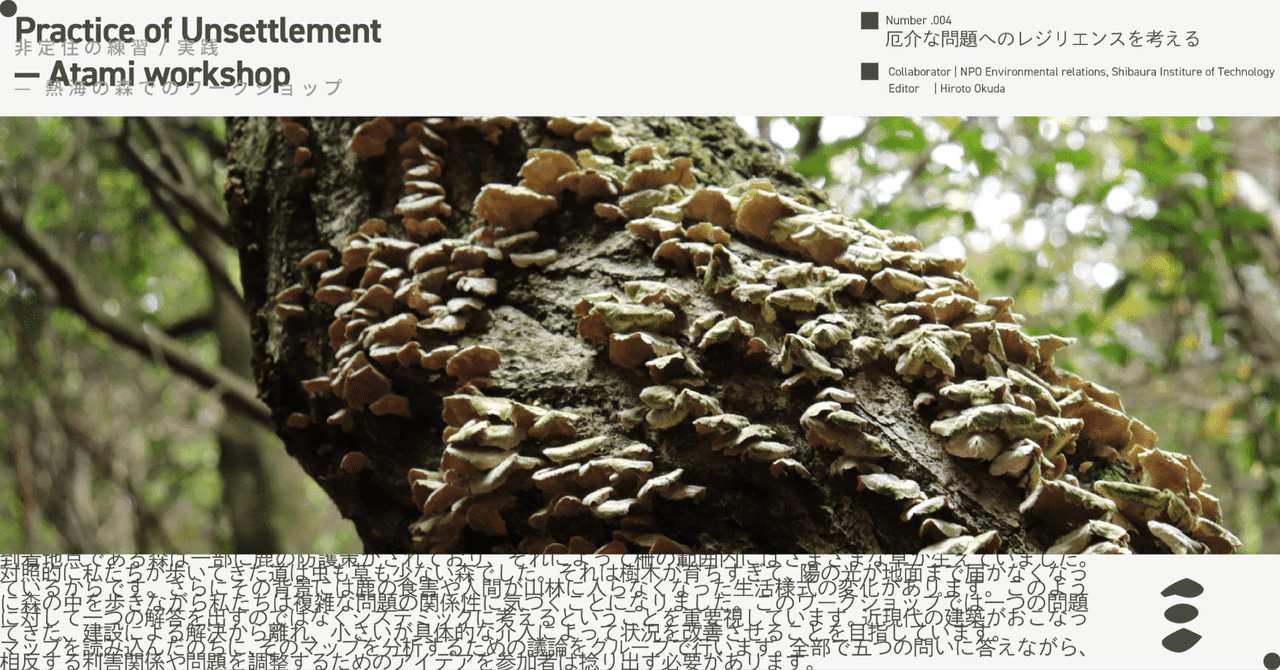
FIG.1
This article introduces the content of a workshop held in late May in the forested areas of Atami City and at facilities at Shibaura Institute of Technology. For this workshop, we collaborated with Environmental Relations—an organization active in Atami—and students from Professor Yamashiro’s seminar at Shibaura Institute of Technology to brainstorm ideas for interventions aimed at enhancing the resilience of the city of Atami. First, we set out on foot toward the mountain property maintained and managed by Environmental Relations. There were few paths well-defined enough to be called mountain trails, so our walk involved navigating steep slopes and pushing through the underbrush.Along the way, Mr. Suzuki from Environmental Relations shared insights on forest maintenance, land management issues surrounding Japan’s mountain forests, and problems such as deer browsing damage.
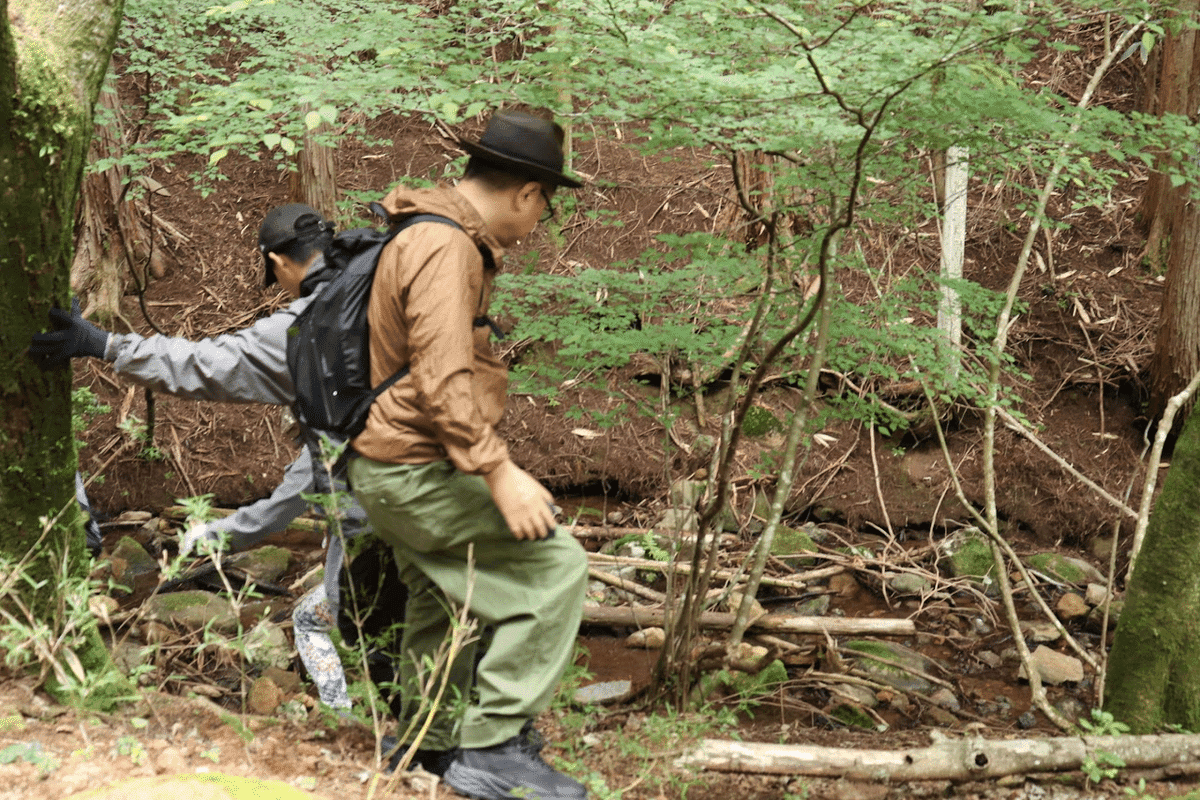
FIG.2
The forest where we arrived had deer-proof fencing in some areas, and as a result, a variety of grasses were growing within the fenced-off sections.In contrast, the path we had walked along was a forest with few insects and little vegetation. This was because the trees had grown too tall, blocking sunlight from reaching the forest floor. Furthermore, underlying this situation were deer browsing damage and changes in lifestyles that have led people to stop entering the mountains. As we walked through the forest in this way, we came to realize the complex interrelationships among these issues.
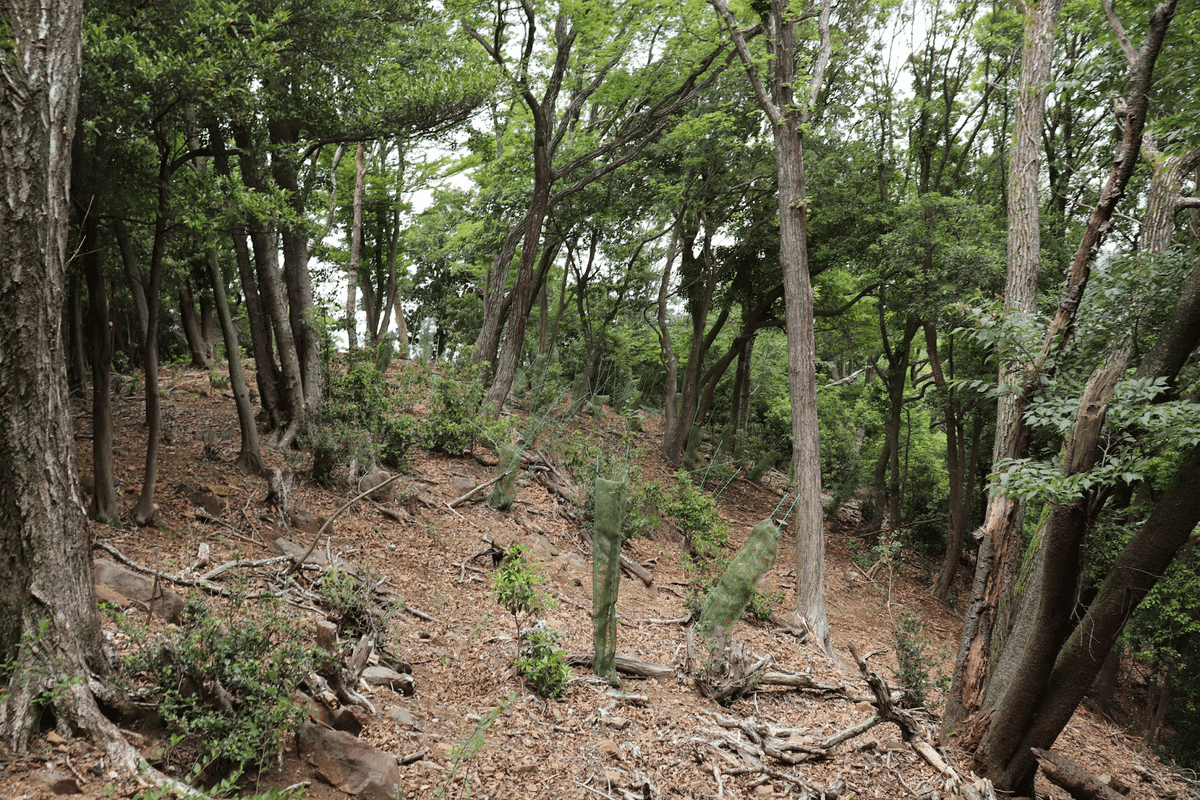
FIG.3
After descending the mountain and arriving at the Shibaura Institute of Technology campus, we held a workshop.
The theme was “Interventions to Enhance Atami’s Resilience.”
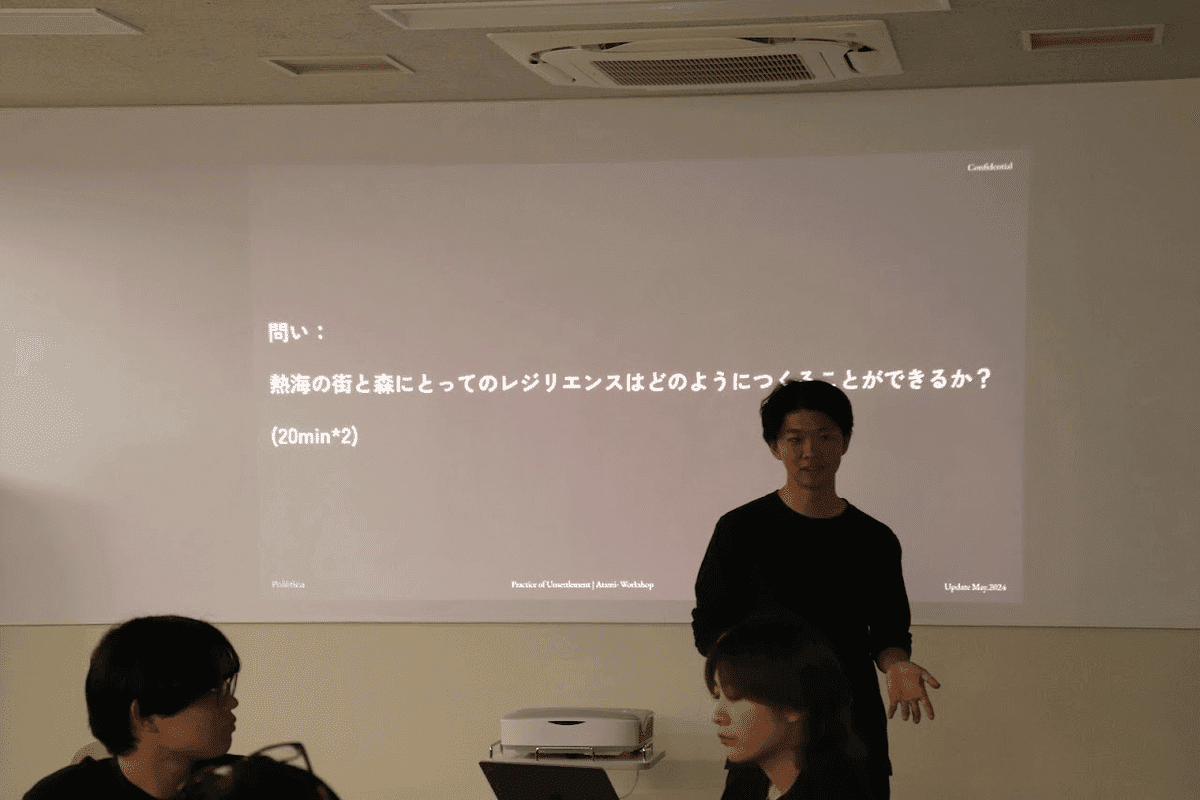
FIG.4
After receiving an introduction to the concept of “non-residency,” we moved on to the actual workshop activities. First, we split into groups and studied materials that mapped the issues surrounding Atami’s forests using the “causal loop” technique from systems thinking.

FIG.5
The goal was to understand the underlying relationships behind the problems by sharing our experiences from the earlier walk through the forests while referring to this map. Furthermore, this workshop emphasized systemic thinking rather than arriving at a single solution to a single problem. Moving away from the construction-based solutions typical of modern and contemporary architecture, we aimed to improve the situation through small but concrete interventions. After reviewing the map, participants will engage in group discussions to analyze it. While answering a total of five questions, participants must devise ideas for reconciling conflicting interests and resolving the issues.
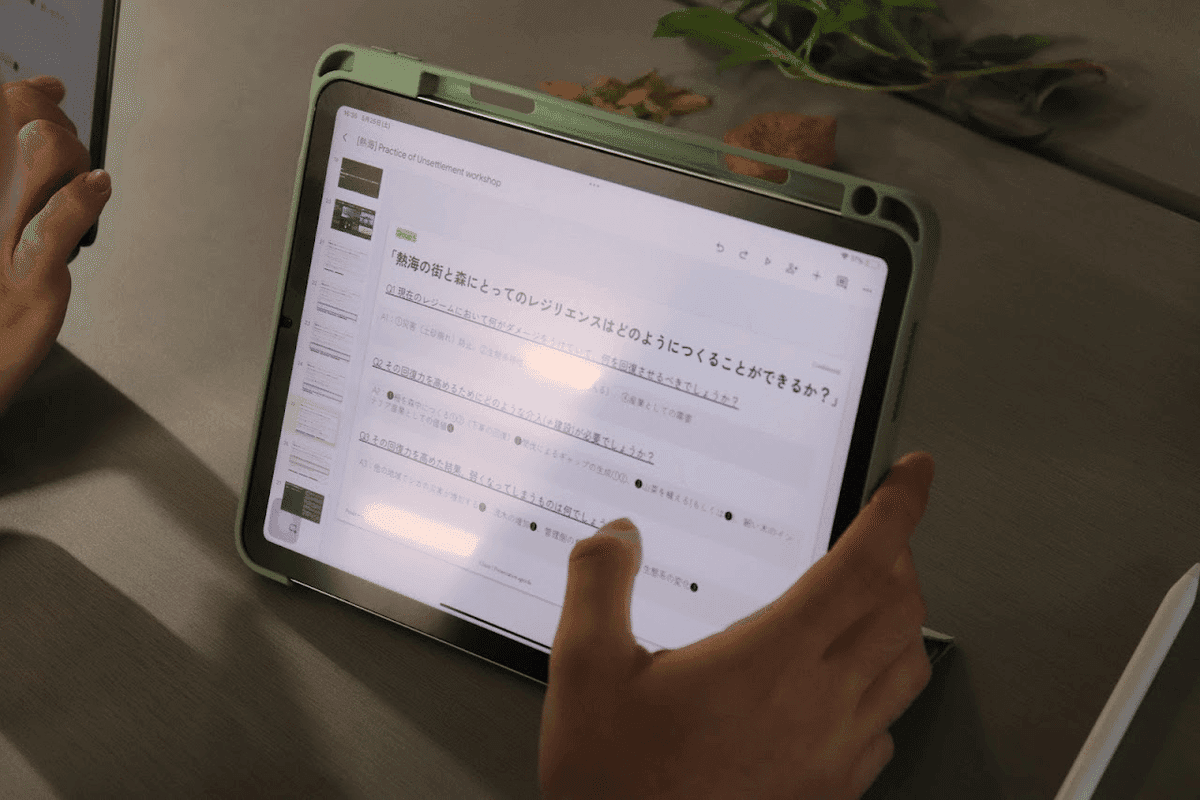
FIG.6
During the workshop, we also engaged in the process of critically examining the ideas we had generated. To transcend the current lifestyle of settled living and the development regime that creates it, can we incorporate non-human perspectives and concepts such as relationality into architecture and design? This proved quite challenging for the participants, and it seems we will need to consider better approaches moving forward.
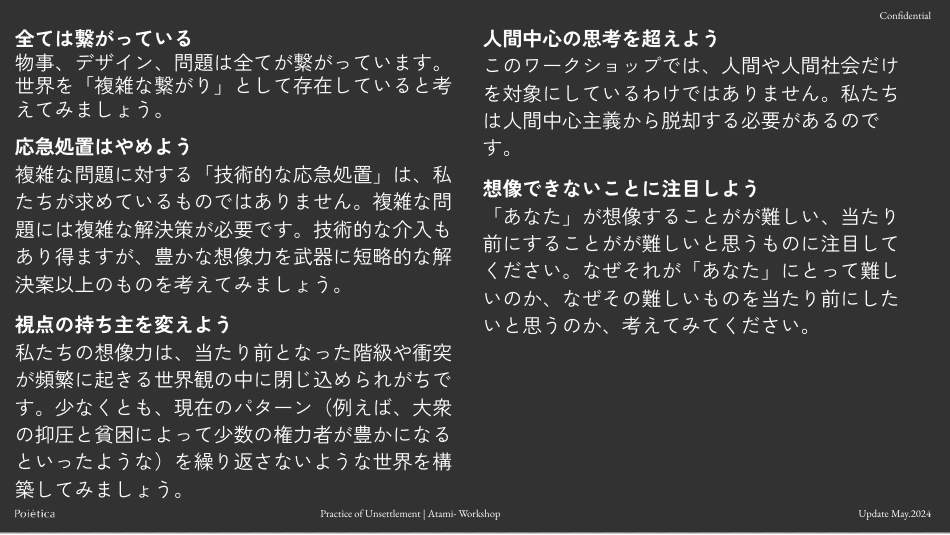
FIG.7
Finally, we concluded the workshop by having each group share their ideas for interventions. Given the limited time available for this workshop, addressing such complex issues proved challenging for the participants; however, feedback from the debriefing indicated that they enjoyed the process of avoiding simplistic solutions and thinking through the problems while acknowledging their inherent complexity.
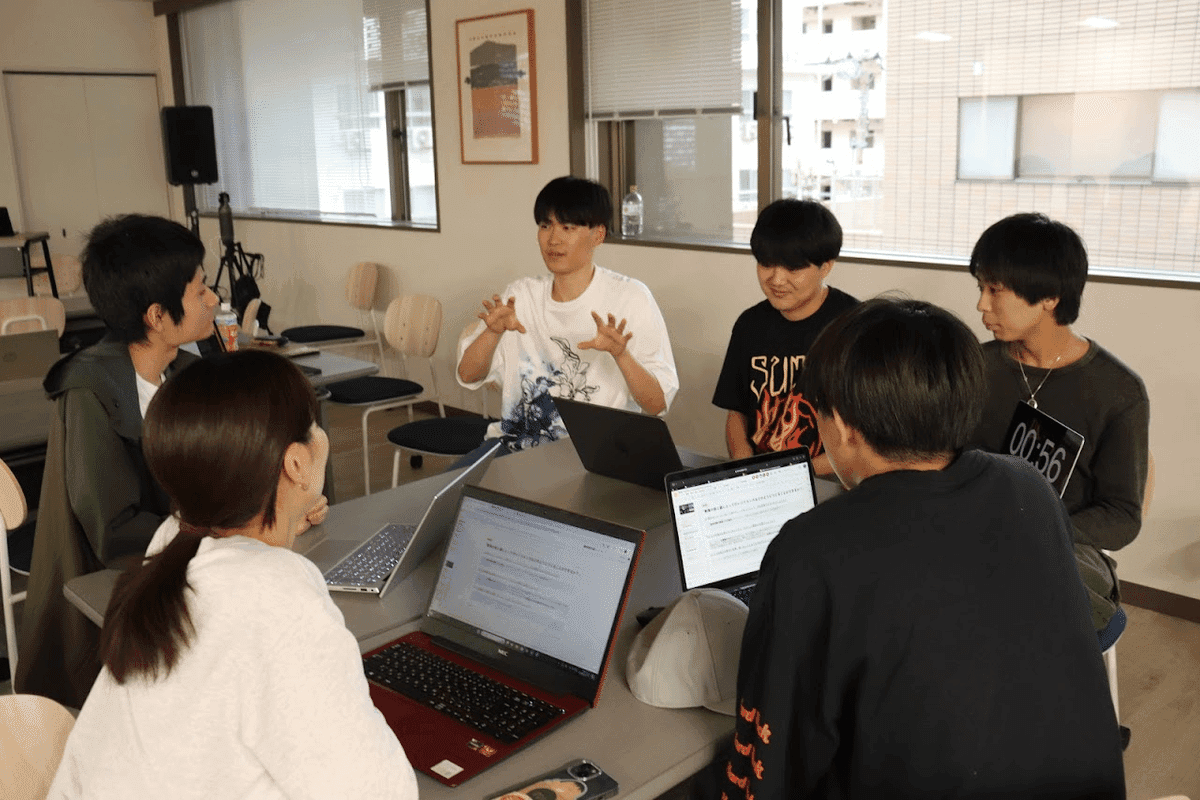
FIG.8
Credits: In cooperation with: NPO Environmental Relations, Shibaura Institute of Technology Project Design Laboratory; Planning and Organization: Yosuke Torii (JGX), Yuzo Okuda (Poietica), Masaki Morihara (ASIBA); Written by: Yuzo Okuda (Poietica)
<Announcement> We plan to continue holding workshops and ideathons to explore non-sedentary lifestyles with a wider audience. Based on the insights gained from this session, we are now seeking participants to experience a refined version of the workshop and provide feedback. The workshop will last 2.5 hours and is scheduled for mid-July. If you are interested, please contact us using the form below.
Theme: Workshop on Redesigning Daily Life, Starting with “Unlearning” GX Duration: 2.5 hours Held online (using Zoom and Miro; if you have no prior experience with these tools, we recommend trying them out on your own before participating) Recommended for: Those interested in the theme of non-sedentary living; those who want to learn new methodologies for ideathons and workshops; and those working on environmental issues in the architecture and construction industries. Inquiries: info [a]poietica.jp Representative Partner: Yuzo Okuda Please apply using the form below.Once participants have been confirmed, we will send you the detailed schedule, Zoom link, and other information. (Limited to the first 20 registrants)
Credit
Statement: Declaration for the Practice of Unsettlement
Practice of Unsettlement #1
STATEMENT
2024.05.10.