INC-3rd Term Class Report #2-1

FIG.1
I’m Kagami, an ASIBA Student Supporter! As a member of the organizing team, I’ll be sharing updates on the program and highlights from our third cohort.
The ASIBA Creative Incubation Program, now in its third cohort, is designed for people aged 30 and under working in creative fields. It aims to foster “creative entrepreneurship that moves back and forth between inquiry and practice” and to encourage social action. From April 26 to 28, a three-day, two-night kickoff retreat was held as Day 2 of the program. The venue was “okutama+,” an accommodation facility renovated from a former middle school.It is a space enveloped in tranquility, located at the headwaters of the Tama River, at the top of a hike through the fresh greenery of the Okutama mountains. This time, the entire group gathered, including members from outside the Tokyo metropolitan area who were unable to attend Day 1 in person. Although the program is still in its early stages, this retreat—where everyone comes together—will significantly strengthen the cohort’s solidarity and the impact of their projects.
On the first day of the retreat, the organizing team began by sharing an overview of the three-day program. The goal of this retreat is to “define what we want to achieve, clarify where we’re heading and how to get started, and give our efforts a boost.” To that end, we’ll be focusing on the following three activities over the next three days.
MVP stands for “Minimum Viable Product.” We’ve redefined it as “Minimum Viable Practice” in ASIBA’s own terminology, and we’ll use it to devise the minimum practical steps needed to validate our own hypotheses. However, various hurdles stand in the way of these practices. “Hurdle Cards” are used to visualize the project’s steps by listing these hurdles and devising methods to overcome them. Finally, we incorporate this into “Life Graph+” as a concrete roadmap, clarifying which stages we aim to reach by when through the program.
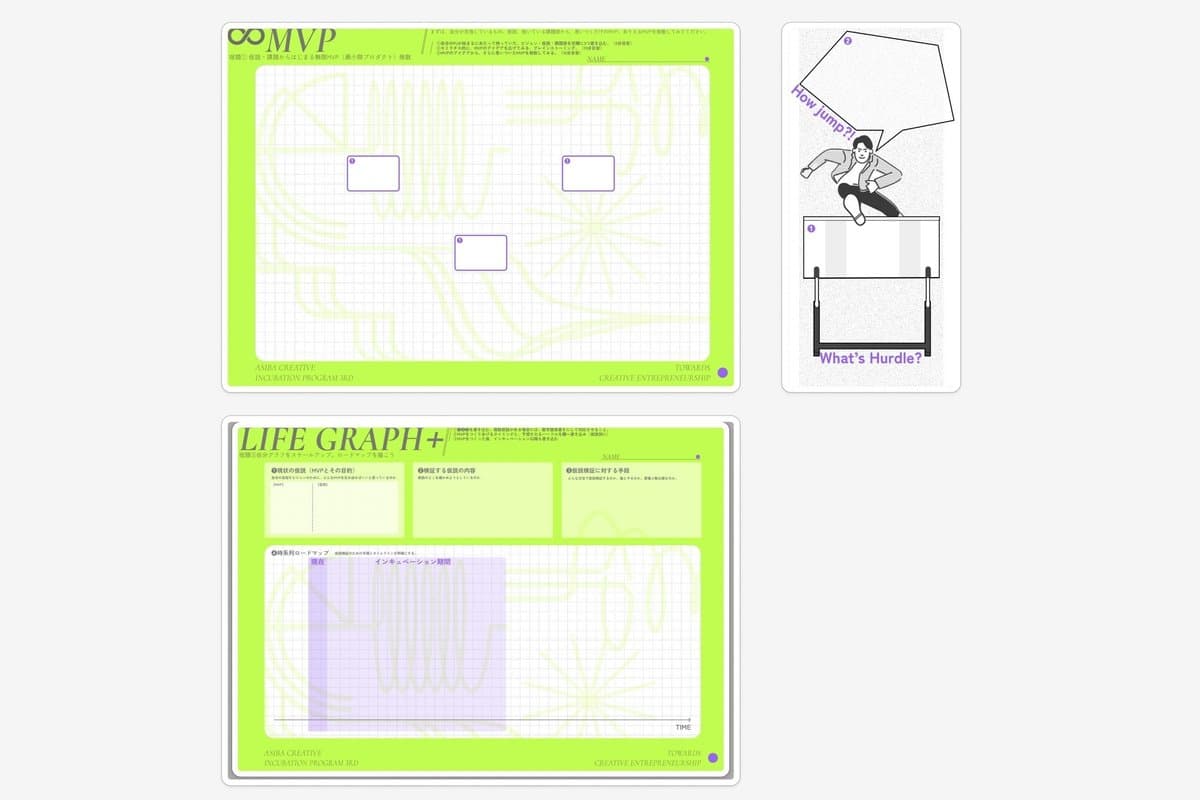
FIG.2
The session began with a lecture by mentor Gen Noda (CEO of SAKIYA Co., Ltd.). He delivered a powerful message about the mindset and perspective needed to transform industries and society through products. “You don’t need a noble motive to get started. But to keep going, it must be sustainable as a business.”Participants exchanged practical questions and comments that directly addressed their own concerns and questions.
“Even if I have to change my approach to keep going, I want to keep questioning my own philosophy.” “I realized it’s important to constantly shift back and forth between my own ego and the user’s perspective.”
Throughout the lecture, it was evident that the participants’ horizons were gradually broadening and their questions were deepening.
The overarching theme of the retreat was to talk with everyone in the cohort. Can I put my thoughts into words, and will they be understood by others? By receiving feedback through dialogue, we refine the details of our projects.
In the evening, participants split into teams to engage in dialogues with mentors and work on individual assignments. It was a time to convey their life journeys and thoughts in their own words to mentors they were meeting for the first time. As they struggled to express themselves fully or faced questions that cut to the heart of the matter, they were forced to confront the feelings deep within themselves. Some participants were even given the assignment to “draw a four-panel comic depicting their ideal scene.” By moving back and forth between introspection, research, and output, we’re making our projects more concrete.
Furthermore, with the group members gathering in person for the first time, the emotional distance that had been invisible online was instantly bridged. Comments such as “I was able to honestly talk about my current concerns” and “I’m glad to have peers who can speak from the same perspective” were heard, making the first day a time when bonds between participants truly grew stronger.
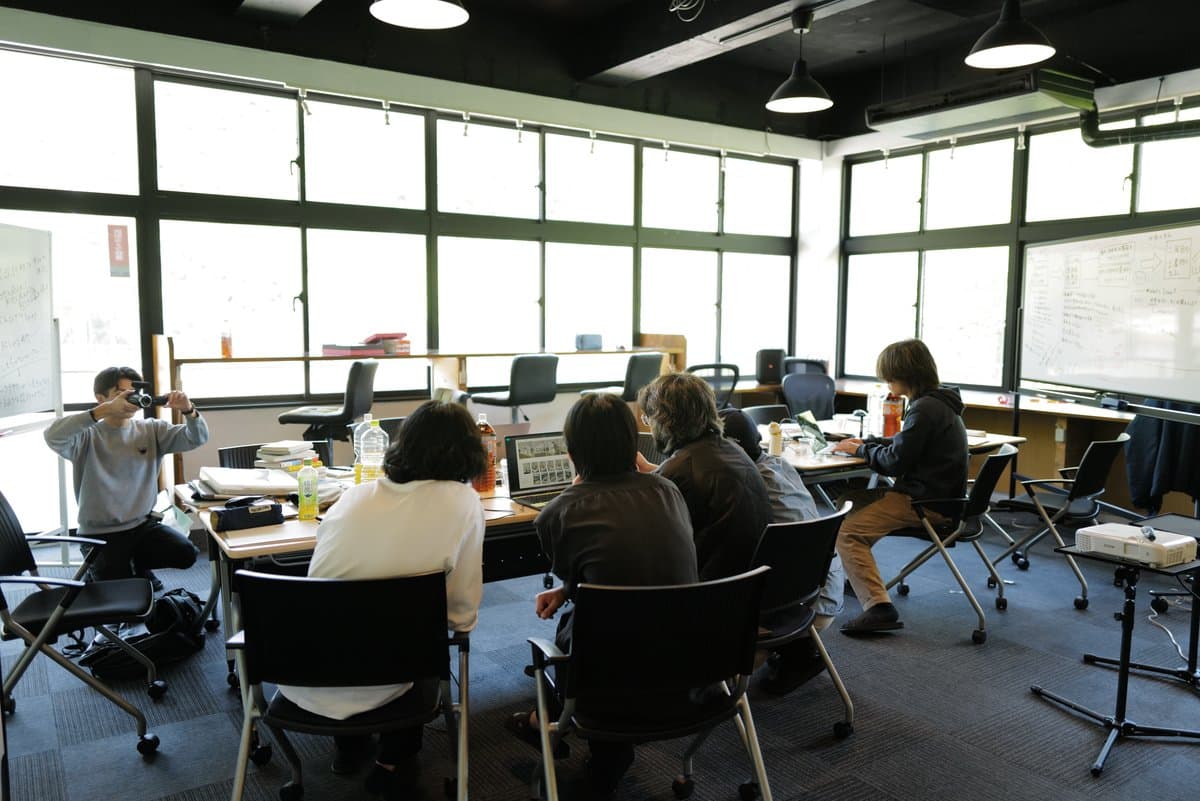
FIG.3
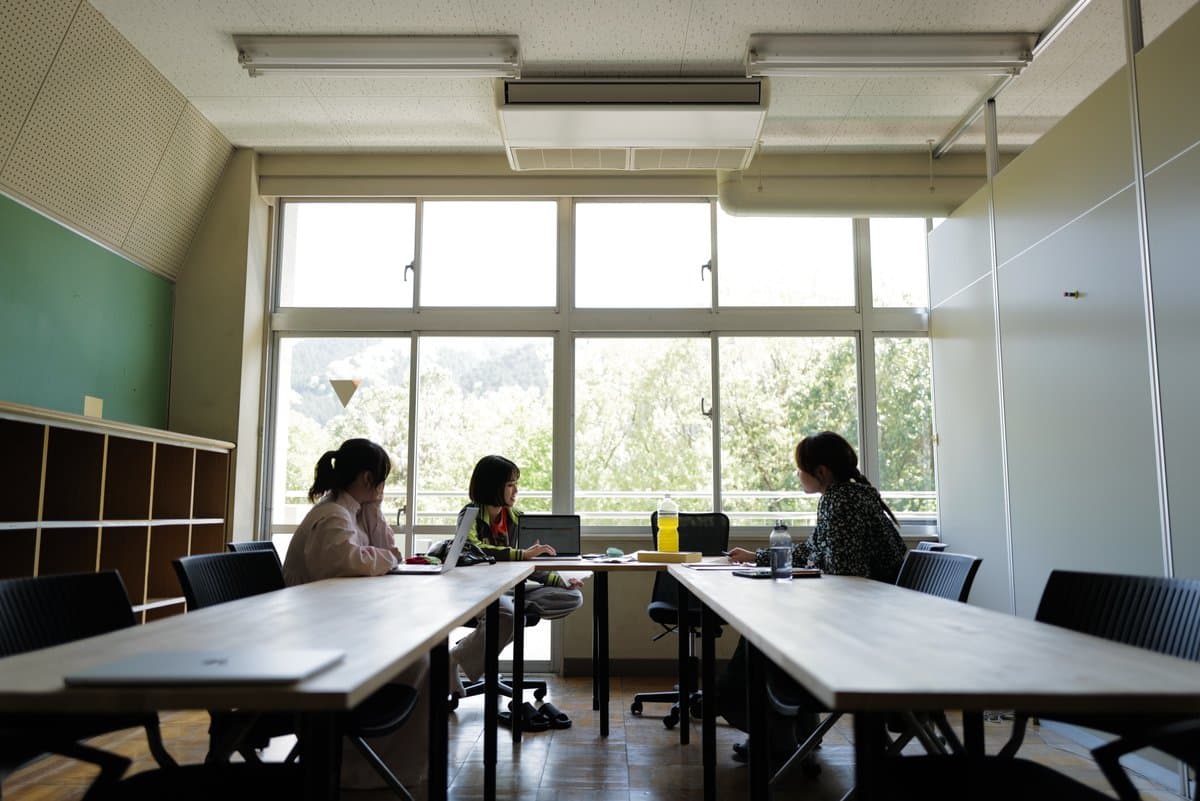
FIG.4
Up until now, the participants have been tracing their roots and continually reflecting on “why they are starting this.” The first day of the Day 2 Kickoff Retreat became a time for them to recognize the connection between themselves and society by sharing these thoughts with others. Where will the participants head from here? Deep in the mountains of Okutama, the river’s journey has only just begun.
Credit
Related Works
INC-3rd Term Class Report #1
REPORT
2025.05.03.