INC-1st Launch Confirmed
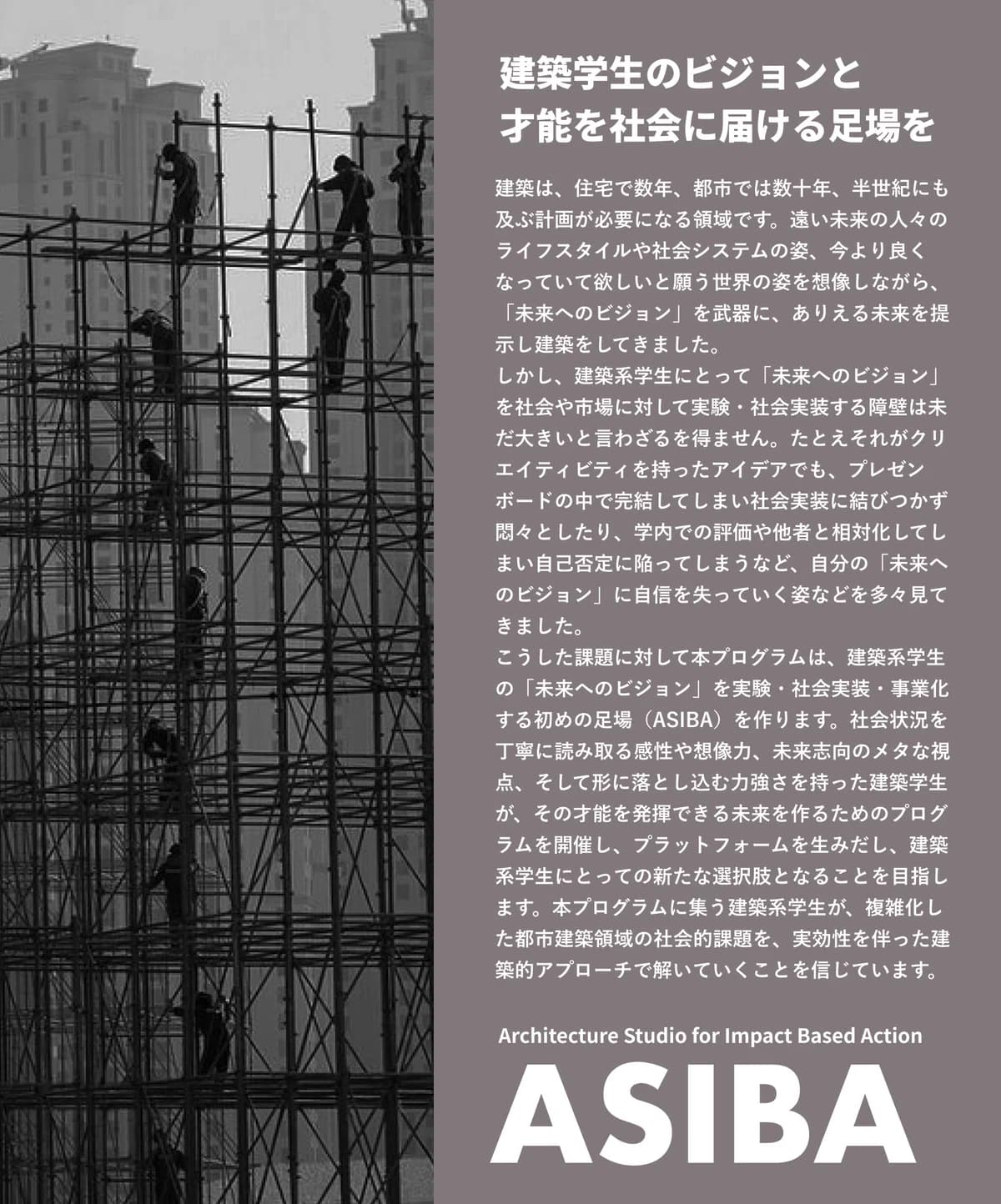
FIG.1
A group of architecture students from the University of Tokyo and Waseda University (led by Yuta Nihei, a first-year master’s student in the Department of Architecture at the University of Tokyo) has decided to launch “ASIBA” (Architecture Studio for Impact Based Action), a two-month incubation program focused on urban architecture and designed for architecture students.Applications for the program open today.
FIG.2
Architecture is a field that requires planning spanning several years for residential projects, several decades for cities, and even half a century.While imagining the lifestyles and social systems of people in the distant future—and a world we hope will be better than today’s—architects have used their “vision for the future” as a tool to present possible futures and create architecture. However, it must be acknowledged that architecture students still face significant barriers to experimenting with and implementing their “vision for the future” in society and the marketplace.I have seen many cases where students lose confidence in their own “vision for the future”—whether because creative ideas remain confined to presentation boards without leading to real-world implementation, leaving them frustrated, or because they compare their work to evaluations within the university or to others, leading to self-doubt.
In response to these challenges, this program creates a starting platform (ASIBA) for architecture students to experiment with, implement in society, and commercialize their “visions for the future.”We aim to organize a program that creates a future where architecture students—those with the sensitivity and imagination to carefully interpret social contexts, a future-oriented meta-perspective, and the strength to bring their ideas to life—can fully demonstrate their talents; to build a platform; and to become a new option for architecture students.We believe that the architecture students who come together through this program will solve the complex social challenges in the field of urban architecture using effective architectural approaches.
—Architects have gradually found themselves unable to belong to a social ideology that grants them a voice.If they belong to any ideology at all today, it is a commercial one. The current reality is that they are subordinate to the market economy system and prioritize commercial architectural projects over public architecture and urban design. For example, how many new public architectural spaces are currently being created in Tokyo where people can linger without spending money?
Cities and the human environment face critical challenges, including climate change, the subtropicalization of cities, the nature of architecture and urbanism in the Anthropocene, population decline and urban policy, the rise of new technologies, and the exposure of social disparities and divisions.The most pressing question for us, as students of architecture in this era, is whether the role of the architect—who oversees the physical infrastructure—needs to be redefined in response to these challenges, and whether we, as a generation confronting an increasingly complex social landscape, must necessarily embrace this awareness. In this program, starting from the visions of future society and systems, the ideal form of urban architecture, and the urban challenges that young architecture students wish to solve, we will conduct research, plan, and implement pilot projects designed to create social impact as the next generation of architects.University professors, representatives from the real estate and general contracting industries, entrepreneurs, and the program management office—a wide range of stakeholders from industry, government, and academia—will collaborate to develop this program.
“Even after several years of architectural education, where students have identified the kind of society they want to create and the challenges they wish to solve, the barriers to entry into the urban and architectural industries as an individual are extremely high, making it difficult to even create or experiment with the goal of societal implementation.”“They lack knowledge of business perspectives, project design, and business planning outside the field of architecture, so they end up abandoning their ideas and becoming discouraged before even attempting to launch them into society.” We have witnessed this situation time and time again.Furthermore, there are still many cases where students fail to receive recognition in university design studios, compare themselves unfavorably to others, and fall into self-doubt; or lose confidence in their own perspective on society and the world, ultimately leaving the urban and architectural industry. However, we believe that the flexible ideas of young architecture students, their sensitivity in swiftly reading social conditions, and the future-oriented, meta-perspective unique to architecture represent the visionary outlook most needed in modern society—and that, depending on how their talents are honed, they have the potential to truly shine.The ASIBA program aims to provide a new alternative for creating a future that does not stifle the talents of young architecture students.
We believe that designing new ways to “connect and synthesize” increasingly fragmented phenomena—presenting prototypes (specific solutions that could become general solutions) as architects and then extrapolating them(systematizing and disseminating them)—we believe this is the conduct of those who will pioneer the next era.
Architectural design education has traditionally focused on cultivating the ability to create imaginative prototypes and integrate spatial design as part of an architect’s skill set. However, we believe it has yet to venture into the realm of social transformation—where specific solutions are universalized and generalized.In the coming era, as the next generation of architects faces the pressing, critical challenges that the future of cities and the human environment will present, shouldn’t they adopt an entrepreneurial mindset—one that does not wait for client briefs or competitions, but instead presents their own vision of society, creates prototypes, and generalizes them into practical, effective forms?Drawing inspiration from MIT designX, which operates a venture accelerator that turns ideas into action, we aim to foster young architects who combine architectural innovation with an entrepreneurial spirit.
1. Lectures and Support from Leading Mentors Architectural social entrepreneurs and developers will participate to support business development and growth.Committed to both the social impact and business design required to address urban architectural challenges, they will provide ongoing support throughout the two-month program to guide participants in conducting proof-of-concept (PoC) experiments, developing business concepts, and managing business operations. *Mentors and other participants will be announced as they are confirmed. 2. Opportunities to Secure PoC Funding: Participants will present the business proposals they develop over the 8-week program to partner companies and stakeholders at the final review session held during the last week. Viable business proposals selected to proceed to the proof-of-concept (PoC) phase will have the opportunity to secure PoC funding from partner companies following a review process.
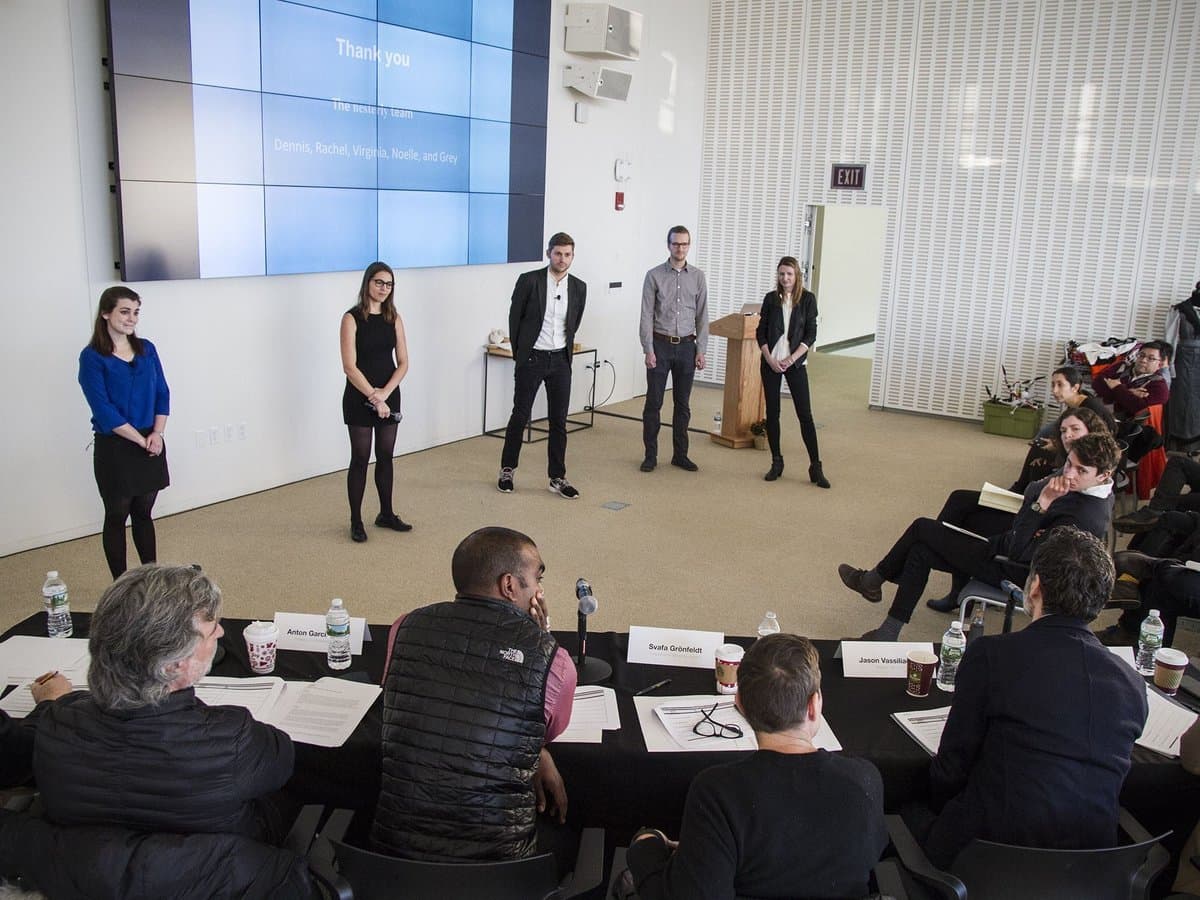
FIG.3
3. An 8-Week Short-Term Program Held every Saturday morning. This 8-week short-term program covers the entire cycle from research to business concept development to proof-of-concept testing. Each week’s sessions offer an intensive experience encompassing a series of processes, including lectures, workshops, in-depth exploration of your vision, and research.
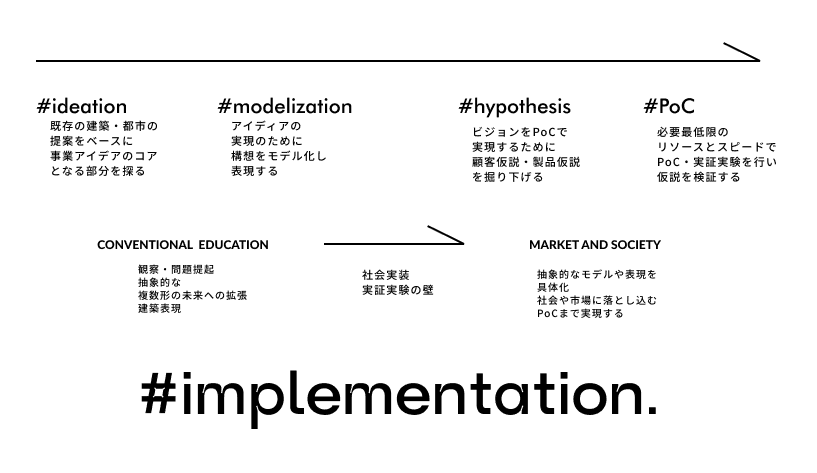
FIG.4
4. A Small Community of Architecture Students: ASIBA is a passionate, small-group community of peers. It serves as a gathering place for like-minded individuals to share architectural and urban challenges and visions, and to drive disruptive transformation in the fields of architecture and urban planning.
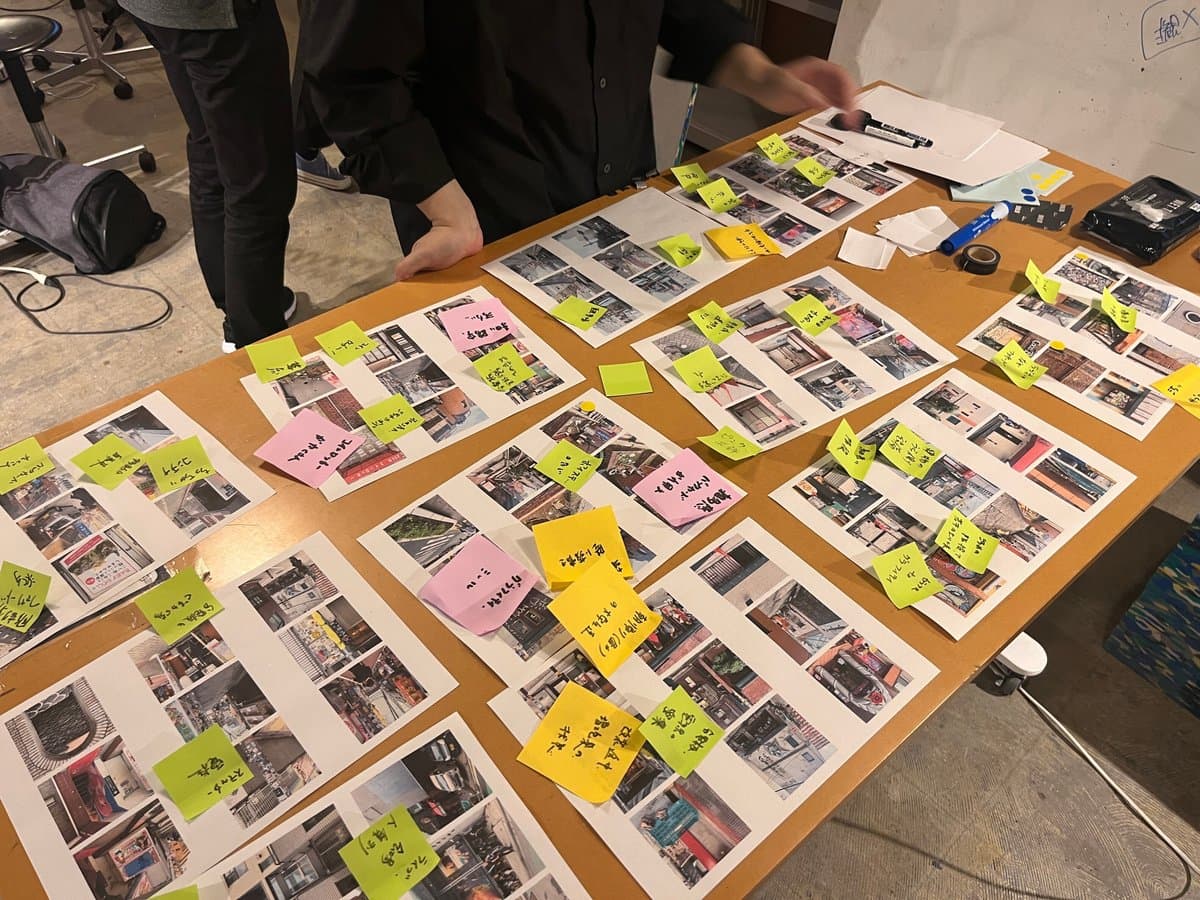
FIG.5
Sessions are scheduled for every Saturday from 10:00 a.m. to 1:00 p.m. Each session will feature a guest lecture (currently being arranged), a workshop, and sketch presentations. Sessions are planned to be held near the University of Tokyo’s Hongo Campus.
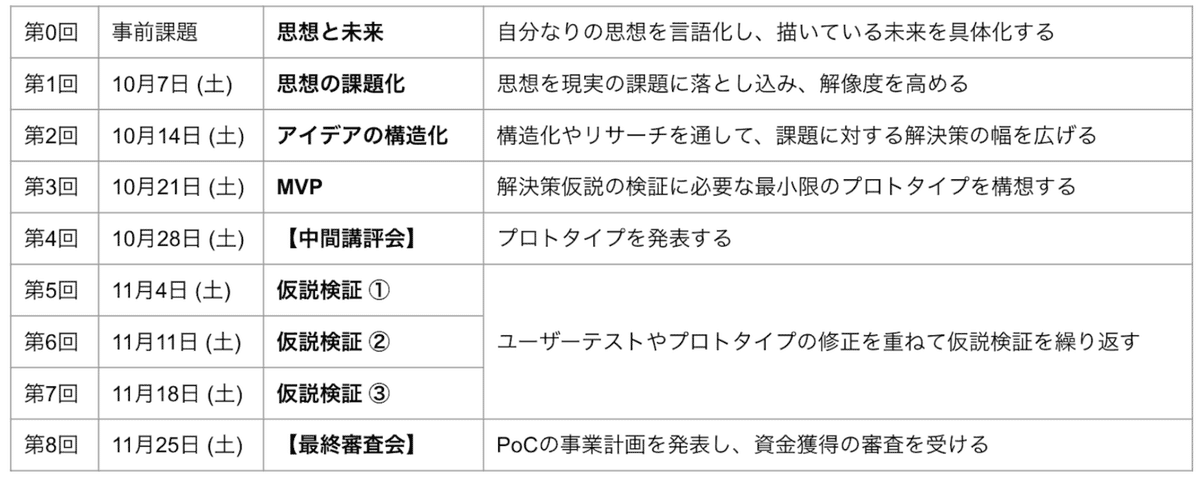
FIG.6
■ How to Apply for This Program
*1 The number of participants may vary. A selection process will be conducted. *2 If you do not meet these requirements but strongly wish to apply, please contact us via the final section of the application form.
■ Online Pre-Program Information Session: We will hold an online information session for those interested in this program. Please fill out the registration form below, and we will send a Zoom link to your email address. Attendance at the information session is not required to apply.
The program is run by a group of volunteers from the architecture departments at the University of Tokyo and Waseda University. We are currently recruiting both core and support members, so please feel free to contact us—let’s build this together!
Yuta Nihei, Master’s 1st Year, Department of Architecture, Graduate School of Engineering, The University of Tokyo. Specializes in building demolition. Alongside theoretical development and historical research, he works on the reuse of demolition materials and “funerals” for buildings scheduled for demolition, striving to bridge the gap between research and practice.Selected for the 2022 Ministry of Internal Affairs and Communications “I-Novation” Program https://yutanihei.studio.site/ https://twitter.com/___yuhe
Masaki Morihara, 4th-year undergraduate student (B4) in the Nakatani Laboratory, Department of Architecture, Faculty of Creative Science and Engineering, Waseda University. While enrolled in a research lab focused on architectural history, he is also advancing architectural projects that link social issues with architectural approaches at architectural design firms, creative teams, and startups.His research theme is “History of Living Architecture in the Anthropocene / Decentered Architectural Design.” https://twitter.com/hamorari3
Hiromi Takano, 3rd-year student in the Department of Urban Engineering, Faculty of Engineering, University of Tokyo. He revived TEDxUTokyo—the university’s largest interdisciplinary conference—after a five-year hiatus. He spent one year studying abroad at UCL in London until this past June. His interests include public transportation in regional cities, downtown revitalization, housing policy, and comparative studies of urban planning systems.TEDxUTokyo 2022 Representative / HCAP Tokyo 15th Cohort Representative
Yu Yamaji, Master’s 1st Year, Department of Social, Cultural, and Environmental Studies, Graduate School of Frontier Sciences, University of Tokyo. He operates a startup that runs the location-sharing app “NauNau” and the corporate-focused metaverse “XRStudio,” among other projects.In graduate school, he is conducting research on community development using local currencies and DAOs. COO, Suishow Inc. https://www.suishow.net/
Nozomi Sudo, Master’s 2nd-year student in the Department of Architecture, Graduate School of Engineering, The University of Tokyo. She is a member of a research lab focused on architectural planning using mathematical methods. Currently, she is focusing on the practice and exploration of generative AI, working on social implementation and creative activities in the fields of architecture and urban planning. She is also interning at an architecture-related startup. https://twitter.com/pseudoschiz0
Please contact us here. We also welcome inquiries from companies, universities, government agencies, and the media—please feel free to reach out.
asiba.studio@gmail.com