
FIG.1
@Kamata Co., Ltd. (Ota Ward, Tokyo; Representative Director: Yoshiyuki Ibarata), which has been operating the KOCA incubation facility and fostering collaborations between small local factories and creators from its base in Ota Ward, Tokyo, and ASIBA, a general incorporated association that runs an incubation program for young professionals in the fields of architecture, design, and art(Bunkyo Ward, Tokyo; Representative Director: Yuta Nihei), which runs an incubation program for young professionals in architecture, design, and the arts, are launching a partnership today to build an ecosystem that accelerates the development of creativity-driven entrepreneurs and the implementation of their projects in society.
Both @Kamata and ASIBA recognize the value of projects that originate from the creative perspectives inherent in the fields of architecture, design, and art, and have served as bridges to accelerate their social implementation, commercialization, and practical application.Through prototyping support and mentoring, we have focused on transforming initiatives—which previously remained mere ideas—into social implementations, striving to create an ecosystem where anyone can continue their creative activities sustainably without having to give up on their creative pursuits. In the current fields of architecture, design, and art, the entrepreneurial spirit—which involves turning one’s own creative ideas into projects, realizing and sustaining them, and aiming to make a social impact—is still insufficient.We refer to the mindset of formulating one’s own questions, building connections with society, and presenting new options to society through concrete actions as “Creative Entrepreneurship” (*1), and we aim to create an ecosystem that further opens up the potential of the fields of architecture, design, and art to society. We believe that exploring and practicing in these new fields should not be limited to individual companies or universities; rather, it is essential to create a rich ecosystem from a long-term perspective through the multi-layered collaboration of multiple entities that share their insights and practical knowledge with one another. To this end, @Kamata and ASIBA will collaborate.
*What is “Creative Entrepreneurship”?
At ASIBA, we define “Creative Entrepreneurship” as the mindset of formulating one’s own questions, building connections with society, and presenting new options to society through concrete actions.Architects, designers, artists, artisans, and engineers—who have historically created new cultures—have tackled previously unrecognized problems and driven social change by giving form to their own questions about society and their curiosity about creation, and by continuously presenting these to the world.We believe that by increasing such actions across society as a whole, we can solve the uncertain and complex problems facing our society today.
◾️Details of the Collaboration The activities to be carried out by both companies as part of this collaboration are as follows.
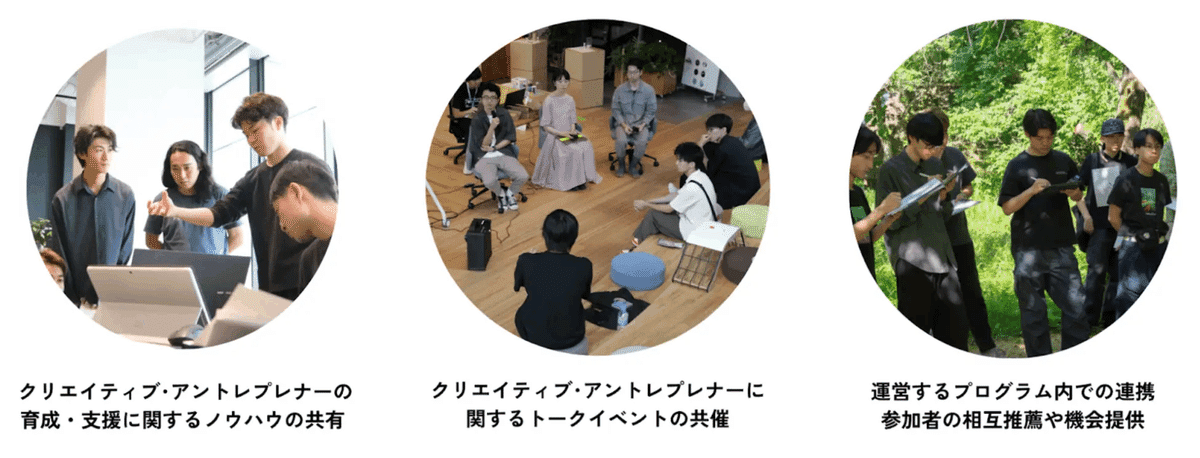
FIG.2
@Kamata has supported more than 70 groups to date through its operation of KOCA, a Tokyo Metropolitan Government-certified incubation facility it has managed since 2019, and has accumulated expertise in supporting startups involved in manufacturing.Furthermore, leveraging the unique characteristics of Ota Ward—the area with the highest concentration of small local factories in Tokyo—we have built a network facilitating collaboration between creators and these local factories. We will actively share these resources with ASIBA. Within the partner ecosystem developed by the General Incorporated Association ASIBA, more than 10 major companies and startups in the construction and real estate sectors, as well as local governments and universities both within and outside Tokyo, are collaborating to build a platform that supports the creative endeavors of young people.Furthermore, by sharing the network of players gathered at ASIBA—including past program participants, students with a strong interest in entrepreneurship, and young professionals—with @Kamata, we will foster new connections and spark innovative synergy.
Through this collaboration, we will develop and promote the concept of the “Creative Entrepreneur” as a model for activities and professional practices that leverage business capabilities to build the very environment necessary for realizing “creations” and “works” within the fields of architecture, design, and art—areas where an entrepreneurial mindset is currently underdeveloped.To this end, as a kickoff event for this partnership, we will co-host a series of talk events exploring the possibilities and methodologies for social implementation in creative fields such as architecture, design, and art.As the first installment, we plan to hold “What Do We Design?” (tentative title) on Friday, November 21, from 1:00 PM to 10:00 PM.
<Talk Event Overview> “What Are We Designing?
” (tentative title) This event explores the possibilities and methodologies for social implementation in creative fields such as architecture, design, and art. In many creative fields, ideas often remain at the proposal stage without ever being implemented in society.Even in terms of business structures and business models, approaches often remain one-dimensional, leading to the abandonment of business design as a means to an end. However, by actually bringing ideas into society, it becomes possible to test hypotheses and engage in more concrete practices. This event will provide the methodologies and new perspectives necessary to achieve this.
Date and Time: Friday, November 21, 1:00 PM–10:00 PM Location: SHIBUYA QWS Details to be announced soon
As designated partners of “TOKYO STARTUP,” a startup support initiative promoted by the Tokyo Metropolitan Government, both organizations will advance mutual collaboration between FFF Tokyo (@Kamata) and the “ASIBA Project Label” (ASIBA General Incorporated Association) within the framework of this initiative.Specifically, they plan to facilitate networking among participants, co-host related events and seminars, and share know-how and information related to startup support and manufacturing.
FIG.3
FFF Tokyo is an incubation (startup support) program specializing in prototyping, aimed at designers, artists, and creators based in Tokyo. It provides comprehensive support from prototyping ideas to building business models, with the goal of fostering new businesses originating in Tokyo.Under the banner of “TOKYO PARALLEL FRONTIER (Another Tokyo),” @Kamata Co., Ltd.—which has been operating the Tokyo Metropolitan Government-certified incubation facility “KOCA,” repurposing vacant homes, and developing the area under the Keikyu Line elevated tracks in Kamata and Omori, Ota Ward (the southernmost tip of Tokyo)—is launching this initiative.“This is an unprecedented startup support initiative for people involved in manufacturing and design.
Details: https://ffftokyo.com/
ASIBA Project Label targets creative projects (*2) in the pre-seed and seed stages. It aims to accelerate these projects by forming unique partnerships and providing support for social implementation, commercialization, and business management.Rather than acting merely as a supporter or funder, we aim to maximize the social impact of these projects—and ultimately drive social change—by working consistently alongside seed projects as a member of their team, from the conceptual stage through to implementation.
Here at @Kamata, based in Ota Ward, Tokyo—a hub for small local factories—we have connected creators with local manufacturing resources and, using KOCA as our base, have launched numerous projects into society.Through this collaboration with ASIBA, we intend to share the startup support and prototyping expertise we’ve cultivated on the ground and, together with ASIBA, support new challengers in the fields of architecture, design, and art.Moving forward, we aim to leverage each other’s assets to strongly support players who are active in society with the goals of “designing an environment that enables continuous creation” and “generating social impact through design.” We look forward to a future where this collaboration sparks the continuous emergence of new cultures and businesses from Tokyo.
I am truly delighted to be able to form this partnership with Ren-san—who has been involved with ASIBA’s incubation program as a mentor from the very beginning—and everyone at @Kamata, who are working on the front lines of business practice in the fields of architecture and design.I believe that if we cherish that instinctive sense of resistance we often feel toward terms like “business” and “monetization”—and treat revenue and funding not as ends in themselves but as means to get closer to the vision we want to realize—we can achieve even more exciting things by transcending current social constraints. With this belief, I hope to continue expanding this circle of solidarity.
Related Works